A 60-square-metre flat in Athens costs about Ksh 110,018 a month at the cited average rent, almost matching the Ksh 111,461 net monthly minimum wage used for comparison. That leaves little room for a tenant's other essential expenses.
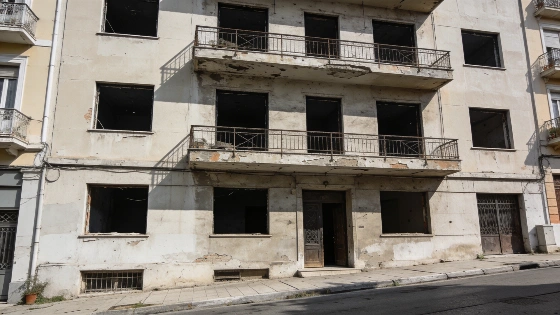
That pressure exists alongside a large stock of unused homes. Greece's 2021 census recorded approximately 794,000 vacant residential properties nationwide, including 117,137 in the Municipality of Athens, where vacancies represented 26.8 per cent of the housing stock. Attica accounted for 255,298 vacant homes, roughly one-third of the national total, according to census figures reported by Sofokleous10. The count includes unoccupied homes, but that does not mean every property is habitable or available for long-term rent. Tens of thousands of residential units have no electricity connection.
Why vacant homes stay off the market
Renovation costs are the leading obstacle, according to an Alpha Bank study: 42 per cent of owners with vacant homes cited repair expenses as a major challenge. About 64 per cent of Greek homes were built before 1990. The study also found that 21 per cent of owners cited multiple co-ownership arrangements or unresolved succession matters. High renovation costs and ownership complications can keep existing homes off the long-term rental market. The share of properties not used as primary residences rises to nearly 35 per cent when holiday homes and secondary residences are included.
Some landlords are also reluctant to rent because they fear missed payments, property damage or lengthy legal disputes. The National Bank of Greece previously estimated that about 250,000 homes had deteriorated to the point where substantial work was needed before they could be occupied. It put the accumulated shortfall in repairs and maintenance at Ksh 5.05 trillion.
The market figures show the strain on tenants. Average asking rent for Athens homes of up to 80 square metres was reported at about Ksh 1,834 per square metre. In 2019, comparable properties in Kypseli and Patissia were advertised at about Ksh 866 to Ksh 938 per square metre. Sofokleous10 also reported Athens rents of about €850 to €900 a month for some older apartments, many more than 50 years old and without adequate heating or insulation. A 12-square-metre fourth-floor flat in Kypseli was advertised for €280 a month.
A 40-square-metre ground-floor flat in Amerikis Square was advertised at about Ksh 93,847 a month. That would take roughly 84 per cent of the net monthly wage used in the comparison.
Students face a separate squeeze. In central Athens, a 35-square-metre studio was estimated to cost about Ksh 63,527 a month, while a 50-square-metre one-bedroom property was listed at about Ksh 90,959. Some students seek shared accommodation or live far from their institutions. Others postpone their studies when their families cannot afford the costs.
What Kenya could assess
Greece has introduced a three-year income-tax exemption for qualifying owners who make homes that have been vacant for three years available for long-term rental. Its reported "Renovate-Rent" programme offers grants covering 60 per cent of renovation costs for empty homes of up to 100 square metres, capped at €8,100, with a three-year long-term rental obligation. The wider government package includes renovation support and tax incentives for long-term rentals, alongside restrictions on new short-term rentals in areas under housing pressure, as the Athens-Macedonian News Agency reported. Early implementation figures suggest incentives alone may not be enough. Alpha Bank has recommended a comprehensive register of vacant properties drawing on land-registry and tax-authority information.
For Kenya, the first step would be to establish the scale and condition of existing vacant housing. A national assessment involving the Kenya National Bureau of Statistics, the Ministry of Lands, the State Department for Housing and county governments could identify homes ready to rent, along with abandoned buildings, unfinished developments and properties needing major renovation. Greece's proposed mapping approach draws on information from the Hellenic Cadastre and the Independent Authority for Public Revenue.
The distinction matters. Some owners may be willing to rent but lack the funds for repairs; other homes may be held up by inheritance disputes or multiple ownership. Affordable renovation loans, conditional grants and targeted tax incentives are options the government could explore to bring suitable properties into use.
Housing demand also affects access to education. Each year, students enter universities and Technical and Vocational Education and Training (TVET) institutions far from home and must find somewhere affordable to live. Authorities could assess whether suitable vacant public buildings can be converted into student accommodation. Universities, colleges, county governments and private investors could also expand properly serviced hostels.
A vacancy tax is another possible subject for national debate in areas under severe housing pressure. A Nairobi property report found asking prices in established suburbs rose 2.3 per cent in the third quarter as construction input prices fell 0.72 per cent. Any tax on long-term vacancy would need safeguards for homes under renovation, tied up in inheritance disputes or unfit for habitation.
Affordability assessments should also account for household income and the full cost of living in a location. Rent is only one expense: transport, utilities and maintenance can determine whether a home is genuinely within reach.