
Spring Valley recorded the sharpest quarterly rise in average asking prices among Nairobi's established suburbs, with a 6.8% increase taking the average to KSh79.4 million. Westlands rose 5.9% to KSh64.5 million, while Muthaiga increased 5.5% to KSh118.1 million. The figures are from HassConsult's House and Land Price Index for July to September 2026, which recorded the gains.
Across the 18 established suburbs, average asking prices climbed 2.3% in the quarter to September, up from 0.9% in the preceding three months. The average reached about KSh33.9 million, its strongest quarterly increase since September 2022. Rental asking prices also rose faster, up 2.7% against 1.4% in the previous quarter. By contrast, asking prices in 14 satellite towns fell 0.6% to an average of about KSh14.4 million, extending the decline from the previous quarter.
Building costs moved in the opposite direction
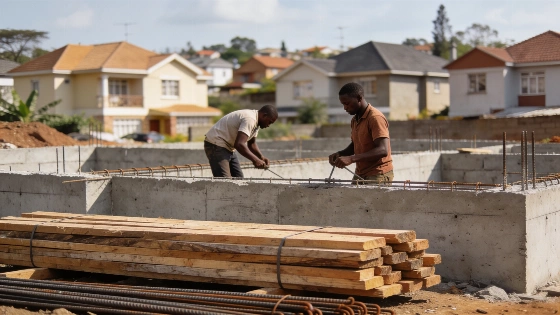
For households building a home, the latest figures were more favourable. The Construction Input Price Index fell 0.72% in the third quarter to 125.45, from 126.36 in the previous three months. That reversed the 5.73% increase recorded in the quarter to June. Annual construction inflation slowed to 3.45% from 5.52%.
The index's transport, fuel and lubricants component fell 2.8%. Fuel and lubricants prices declined 3.93%, while transport costs dropped 1.64%. Building materials, which make up 51.09% of the index weighting, fell 0.64%. Steel and reinforced bars declined 2.04%; timber and wood fell 2.36%. Metal doors and windows were down 4.74%. Glass and glass putty rose 9.12%, while labour costs edged up 0.15%.
Credit conditions and location shape the market
Financing conditions have eased as asking prices in established suburbs have risen. Central Bank of Kenya data show average commercial bank lending rates at 14.4% in September 2026, down from 17.2% in November 2024, while private-sector credit growth reached 10.6%. The Central Bank Rate fell from 13% in June 2024 to 8.75%. Sakina Hassanali, HassConsult Co-CEO and Creative Director, said: "Lower borrowing costs and stronger private-sector credit growth are creating a more supportive environment for property investment." She also cited limited housing supply in established neighbourhoods as adding to upward price pressure. A separate economic growth report put Kenya's second-quarter 2026 expansion at 5.1%; that figure does not establish the cause of the property-price changes.
Rental asking prices rose 6.2% in Loresho to KSh338,100 a month and 5.1% in Kitisuru to KSh350,100. In Muthaiga, they increased 4.5% to KSh370,900; Gigiri rose 3.9% to KSh402,100. HassConsult linked demand in established northern suburbs in part to expanding United Nations operations and personnel relocating to Nairobi.
Prices in satellite towns fell for a second consecutive quarter. Average asking prices declined 0.6% to KSh14.43 million, while rental-price growth slowed to 0.4% from 1.1%. Ngong fell 1.2% to KSh19.1 million and Ongata Rongai dropped 1% to KSh15.4 million. Juja recorded a 0.6% decline; Kitengela fell 0.5%. Land prices in Nairobi's 18 tracked suburbs rose 0.7% in the quarter, down from 1.4% in the second quarter, to an average of about KSh233.5 million per acre. Five locations recorded declines, marking the slowest suburban land-price growth in three years, Eastleigh Voice reported.
The Central Bank of Kenya's October Financial Sector Stability Report recorded national residential property-price inflation of 2.2% year on year in the second quarter, down from 4.8% in the first quarter. Banks expected private-sector credit growth to reach 11.2% by December 2026, according to the CBK market-perceptions survey reported by The Star.








