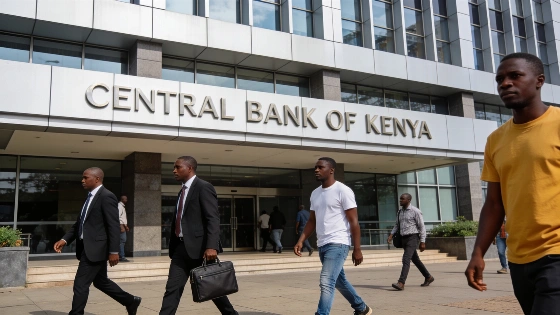
Kenya’s Central Bank has refused to budge on its main lending rate, keeping it at 8.75 percent while inflation creeps toward the government’s ceiling. The Monetary Policy Committee left the rate unchanged for the fourth meeting in a row. This signals a cautious approach as the cost of living keeps rising. Most economists expected the move, according to a Reuters financial review.
Core inflation in Kenya, which excludes volatile food and energy prices, rose from 3.4% to 4.0% in September 2026, driven by higher prices for milk, wheat products, and vegetable oils.
Inflation pressure and government response
Annual inflation hit 6.8 percent in September, up from 6.6 percent in August. That puts it just below the government’s 7.5 percent ceiling. The Central Bank of Kenya (CBK) expects inflation to stay inside the 2.5 to 7.5 percent target range for now, but the latest numbers have put a spotlight on the rising cost of daily essentials. Kenyans.co.ke reporting shows food inflation reached 9.5% and transport inflation jumped to 15.6% in September. These are the hardest-hit sectors. The CBK points to government steps like subsidies and a temporary cut in value-added tax on fuel as reasons inflation has not broken through the ceiling.
The Monetary Policy Committee stated that maintaining the 8.75% rate remains appropriate, despite risks from rising global energy prices and geopolitical tensions. Governor Kamau Thugge linked the cautious stance to the need to assess the impact of energy shocks stemming from the conflict around Iran.
Economic outlook and risks ahead
The committee has nudged its 2026 growth forecast up to 5 percent from 4.9 percent. Even so, the outlook is clouded by risks. The El Niño weather pattern could disrupt farming and drive up food prices, making inflation harder to control. The CBK’s decision to keep the rate steady shows it is trying to walk a fine line: it wants to support growth but cannot let prices spiral. External threats, like higher energy costs from Middle East tensions, remain a worry. Still, the CBK expects inflation to stay within its target band for now.
Kenya’s monetary policymakers are betting that holding the line will help steer the country through this rough patch. With inflation pressing up against the upper limit and outside risks still in play, the CBK’s refusal to cut rates is a move to keep things stable. For now, borrowers and businesses in Kenya face a credit market where costs are locked in place, and the fight to keep inflation under control continues. The Central Bank’s message is clear: it will not rush to change course, even as pressure builds.