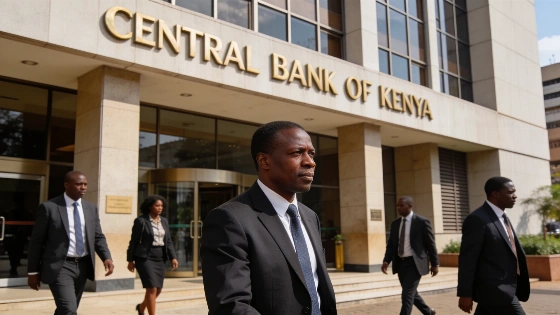
Kenya’s central bank has decided not to raise interest rates, holding its benchmark lending rate at 8.75 percent. The Monetary Policy Committee made the call on 7 October 2026, sticking with the same rate for the fourth meeting in a row. The committee said its current stance is still the right one to keep the economy steady, according to an official statement from the Central Bank of Kenya.
The consumer price index increased from 155.85 points in August to 156.47 points in September 2026, representing a monthly rise of 0.4 percent.
What’s driving inflation and how the government is responding
The government has tried to cushion families by rolling out subsidies and cutting VAT on fuel for a limited time. But these steps have not fully protected households from rising prices. Data from Khusoko shows food and non-alcoholic drinks cost 9.5 percent more than a year ago, and transport costs have jumped 15.6 percent. These numbers show how global price shocks are hitting Kenyan wallets.
External risks are piling on. The Monetary Policy Committee flagged the conflict in the Middle East and rising global energy prices as threats that could push inflation even higher. The bank warned that pricier fuel could drive up transport and production costs, which would then feed into the price of goods across the economy.
The Central Bank of Kenya noted that, despite the recent uptick in inflation, the decision to hold the rate was based on expectations that inflation would remain within the target range in the short term, supported by a stable exchange rate and improved food supply.
How borrowers and businesses are feeling the impact
By keeping the Central Bank Rate at 8.75 percent, the regulator has spared borrowers another round of higher costs. Commercial banks charged an average lending rate of 14.4 percent in September 2026. That’s only a touch higher than the month before, and still well below the 17.2 percent peak from November 2024. Private sector credit growth has picked up, with lending to sectors like trade, construction, agriculture, finance, and consumer goods showing strong demand.
For businesses, the decision brings some predictability at a time when global markets are shaky. The central bank’s September 2026 surveys found business leaders are still upbeat, helped by steady macroeconomic conditions, more government spending on infrastructure, digital innovation, and easier access to credit as rates have come down from earlier highs.
What’s next for policy and the risks ahead
The Monetary Policy Committee is not just coasting. While it sees the current approach as fitting, it is watching global oil prices and other risks that could send inflation higher. The committee has said it "stands ready to take further action as necessary in line with its mandate."
Kenya’s central bank is trying to strike a balance: it wants to keep inflation in check, but also keep the economy moving and shield borrowers from more shocks. The choice to hold rates steady shows a practical read of the situation. Inflation is rising, but not out of control. Credit growth is coming back, but could still be knocked off course by outside shocks. For now, the bank is betting that staying the course will help Kenya’s fragile recovery more than another rate hike. Whether that works out will depend on global energy prices and the weather, both of which are out of Nairobi’s hands. According to a Reuters financial review, the bank has not rolled out any emergency tightening, sticking to its view that price growth is still manageable even after the recent uptick.