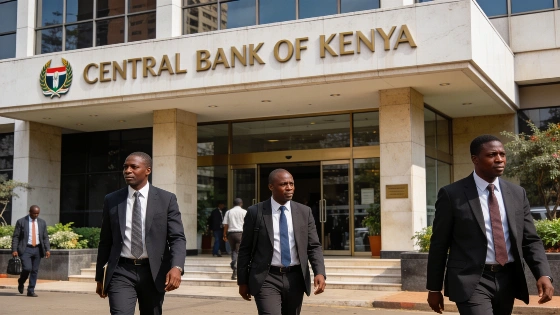
Kenya’s central bank stuck with its main lending rate at 8.75 percent in October 2026. This marks the fourth meeting in a row with no change. Inflation, however, has picked up speed. In September, the rate hit 6.8 percent, the highest since January 2024.
Food and transport costs were the main drivers of inflation in September 2026, with annual increases of 9.5% and 15.6% respectively.
Even with inflation rising, policymakers say they are not worried about breaking the official target range in the short term. The central bank credits government moves like subsidies and a temporary VAT cut on fuel for softening the blow of higher prices. These steps have helped keep inflation from running out of control.
Inflation and policy response
Inflation has crept up for three straight months. It moved from 6.5 percent in July to 6.6 percent in August, then to 6.8 percent in September. Reporting by The Star points to food and transport as the main culprits. The central bank says its current tools, backed by government action, are enough to keep inflation inside the 2.5–7.5 percent target for now.
Targeted subsidies and the VAT cut on fuel have played a direct part in holding back inflation. Policymakers see these as key to keeping the economy steady, even as outside and local pressures build. The central bank expects these measures to keep inflation in check in the near term.
Growth outlook and risks
Alongside the rate decision, the central bank nudged its 2026 growth forecast up to 5 percent. That’s a slight bump from the 4.9 percent it predicted in August. Still, there are risks on the horizon. El Niño looms large, and officials warn that Kenya’s economy remains exposed to climate shocks.
The central bank's decision in October 2026 marked the eighth consecutive month with the policy rate held at 8.75%, as the previous meeting in August also ended with no change. Despite external shocks, the CBK described the economic outlook as stable.