
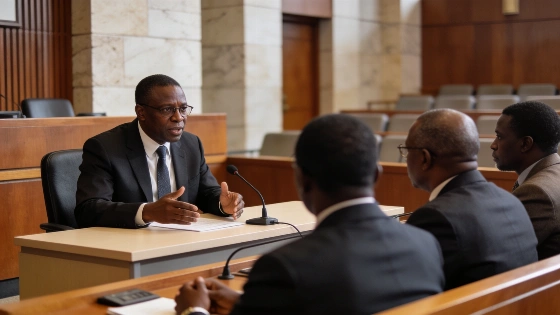
At a parliamentary committee hearing on Tuesday, October 13, 2026, Financial Reporting Centre Director-General Naphtaly Kipchirchir Rono said Kenya had addressed six action items in the previous two and a half months.
That brings the total to 19 of the 21 actions required to strengthen the country’s anti-money laundering and counter-terrorism financing systems. Rono said Kenya was optimistic about meeting the deadline and in a strong position to leave the Financial Action Task Force grey list. But passing laws will not settle the final assessment. Kenya must show the measures are working in practice, as Eastleigh Voice reported.
The April 2027 target hinges on closing the two outstanding actions and proving the adopted measures are being implemented effectively. Kenya remained under FATF enhanced monitoring in its June 2026 review. The country was placed on the grey list in February 2024, after FATF found insufficient progress on weaknesses identified in its 2022 mutual evaluation.
At that point, two of the 40 FATF recommendations were rated compliant. Twenty-six were partially compliant, while 11 were non-compliant. Nine of the 11 immediate outcomes received low effectiveness ratings. The grey list covers jurisdictions with strategic deficiencies that have committed to address them through an agreed action plan.
Kenya’s technical ratings improved after reassessments of 15 recommendations in April 2024. Ratings for 14 more recommendations were upgraded in August 2024. Legislative changes in 2023 and 2025 expanded anti-money-laundering obligations for accountants and real-estate agencies. The rules also covered pension-sector entities and mining companies. SACCOs and public-benefit organisations were brought under the expanded obligations.
FATF’s 2026 assessments noted stronger supervisory capacity and a regulatory framework for virtual-asset service providers. They also recorded growth in terrorism-financing investigations and prosecutions. The agency continued to call for more risk-based supervision. It also sought more suspicious-transaction reports and better use of financial intelligence. Beneficial ownership remains an area of focus. So do trusts and oversight of non-profit organisations, as The Star reported.
The National Assembly Committee on Delegated Legislation was examining the Prevention of Terrorism (Implementation of the United Nations Security Council Resolutions on the Suppression of Terrorism) Regulations, 2026. The proposed rules create a framework for freezing assets belonging to individuals and entities designated as suspected of involvement in terrorism. They also set out when access to those funds may be allowed.
MPs asked whether exemptions for people with frozen assets could create security loopholes. Rono said exceptions covered medical treatment. Basic expenses also qualified, as did humanitarian needs. FRC Director of External Relations James Manyonge said applicants must explain their circumstances and obtain a judicial or administrative order before funds can be released. “It’s not automatic.” The proposed rules apply to assets held by individuals and entities on relevant sanctions lists. Access to frozen funds is not automatic, Bloomberg reported.
The FRC’s regulatory work comes alongside financial-sector developments covered in this earlier report on Nairobi’s growing role in regional capital markets.
Officials told the committee that legislative amendments had raised the cash withdrawal threshold to US$15,000, equivalent to approximately KSh1.8 million. Consistent application across commercial banks would require further guidance from the Central Bank of Kenya.
Committee members called for joint technical workshops and benchmarking exercises involving Parliament and regulatory agencies. The FRC said complementary regulations on proliferation financing would be presented to Parliament in the coming week. That framework covers the financing of weapons of mass destruction and related materials.








