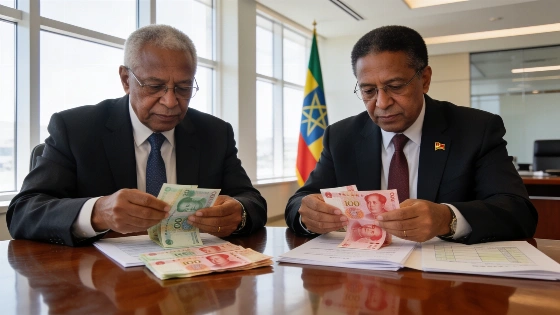
China has pledged nearly $51 billion for Africa over the next three years. Ethiopia moved fast. The country locked in a direct currency swap deal with Beijing. Finance Minister Ahmed Shide announced the agreement. It lets Ethiopia and China settle trade in birr and yuan. No US dollars needed. The goal is to ease Ethiopia’s ongoing foreign exchange crunch.
Ethiopia officially joined BRICS on January 1, 2024, and has since prioritized expanding settlements in national currencies to reduce reliance on foreign exchange.
Currency swap aims to unlock trade and investment
Ahmed Shide said both national banks will issue directives to put the swap into action. Final details are still being worked out. The plan is to make trade more flexible, draw in foreign investment, and tighten Ethiopia’s economic ties with China. China is already one of Ethiopia’s biggest trading partners. Ethiopia sends oil seeds, flowers, coffee, and meat to China. In return, it imports a wide range of goods from the world’s second-largest economy. Chinese exports to Ethiopia jumped from $254 million in 2001 to $4.07 billion in 2016. That’s a huge leap.
The deal shows intent, but there’s no independent confirmation yet of a formal signing or launch. The technical details—like the swap’s size or how long it will last—are still under wraps. The Ethiopian Foreign Affairs Institute calls this a possible direction, not a finished system. Neither side has published the swap’s terms. The Institute points out a big hurdle: the birr is not convertible. That makes swaps tricky without special clearing systems. Official analysis from the Ethiopian Foreign Affairs Institute lays out these structural problems.
Ethiopia completed its transition from a fixed exchange rate to a market-based regime in July 2024 as part of IMF-supported reforms, creating a new context for future currency agreements.
China’s expanding economic footprint in Ethiopia
China’s reach in Ethiopia goes beyond trade. AliExpress, owned by Alibaba Group, just entered the Ethiopian market. This move ties the two economies even closer. During his trip, Abiy Ahmed also met with leaders from China Communications Construction Company (CCCC). CCCC built major Ethiopian projects, including the Sheger riverside development. The summit also featured an Ethio-China business exhibition.
President Xi Jinping promised more support for Africa. That includes money for infrastructure and jobs. Trade between China and Africa hit a record $282 billion in 2023. The China-Africa partnership is now 70 years old. It keeps changing, with new financial tools and deeper business links.
For Ethiopia, this swap is more than a technical fix. It’s a calculated step to steady its finances, attract investment, and gain more control over its economic future. The government is pushing ahead with these deals, even as it faces tough challenges at home and abroad. It’s a pragmatic move. If the swap works, Ethiopia could finally get some relief from its foreign exchange squeeze and build stronger ties with China.