The launch of the Zimbabwe Gold currency changed how the country records its national accounts, complicating comparisons of US-dollar GDP across years. The International Monetary Fund says consistent currency measurement is essential when assessing the figures.
The IMF’s October 2026 World Economic Outlook puts Zimbabwe’s economy at $65.92 billion, ranking it 14th among Africa’s largest economies. That is ahead of Cameroon, at $64.81 billion. Zimbabwe also ranks above Tunisia, at $62.74 billion. The Fund’s earlier estimates placed the country 17th in 2025, at $51.22 billion, then 16th in April 2026, at $56.71 billion.
The ranking measures nominal output in US dollars. It does not directly show monetary stability or living standards. Exchange-rate movements can change international comparisons without any corresponding shift in production.
Growth and currency pressures
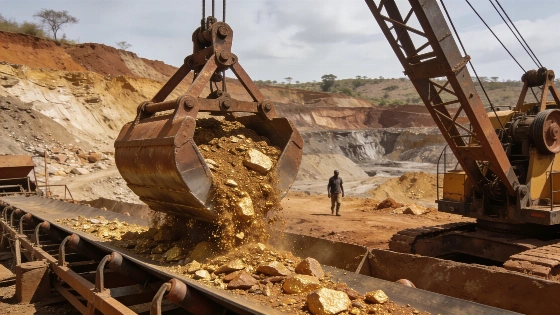
Zimbabwe’s economy is forecast to grow by 5% in 2026, after estimated expansion of 8.3% in 2025. Mining activity has strengthened. Agricultural production has recovered, and gold export earnings have risen. Remittance inflows have also supported the outlook.
Finance Minister Mthuli Ncube cited the same growth figures at a Zimbabwe Roundtable in Bangkok on October 13, 2026. He reported that first-half budget revenue reached $5.3 billion, 30% above target. Ncube also said Zimbabwe had met all five quantitative targets under its IMF Staff-Monitored Programme by the end of June. It had also met four structural benchmarks, as detailed in Ncube’s October update.
Tanzania’s projected GDP is $96.18 billion, or $30.26 billion more than Zimbabwe’s. Its 2026 growth forecast is 5.9%, compared with Zimbabwe’s 5%. Different monetary policies are among the factors behind the gap.
Zimbabwe introduced the ZiG in April 2024 after years of high inflation and currency depreciation had weakened confidence in the local currency. The US dollar remains dominant. It accounted for about two-thirds of payments by value in the national payment system, according to the IMF’s May 2026 assessment.
In October 2026, the Reserve Bank of Zimbabwe said ZiG accounted for more than 40% of payments, while noting that the currency remained difficult to obtain in some regions. The bank has not set a fixed date for phasing out the US dollar. Its approach depends on economic readiness, including low inflation and stronger reserves. It also requires exchange-rate stability and wider ZiG use, as the RBZ plan reported in October.
Dollar use has helped households and businesses protect their finances against depreciation, but it limits the central bank’s control over monetary policy. Annual ZiG inflation was 2.9% in August 2026, then rose to 3.7% in September, according to the Zimbabwe National Statistics Agency. Ncube also reported September annual ZiG inflation of 3.7%. The IMF has urged continued fiscal discipline and reforms to strengthen confidence in the financial system.
Debt arrears remain a drag on Zimbabwe’s access to international finance. Econet Wireless Zimbabwe, founded by Strive Masiyiwa, adjusted its payment systems to accommodate the new currency.
Tanzania’s contrasting policy and investment path
Tanzania has moved to strengthen the use of the Tanzanian shilling in domestic transactions. Regulations introduced in March 2025 require businesses to price goods and services in shillings and accept payments in the currency, subject to specified exceptions.
Agriculture and construction have contributed to growth. Mining and tourism have added to it, alongside infrastructure investment. Tanzania is also pursuing a proposed $42 billion liquefied natural gas project involving international energy companies. Its status, including the pending final investment decision, was covered in earlier LNG coverage.
Tanzania’s faster forecast reflects wider economic activity and investment trends; currency policy alone does not explain the difference. Both countries remain exposed to exchange-rate pressures and external economic risks.