“A 30-year concession means what? Just look at the life cycle,” Narayan said, arguing that port operators can spend years building facilities and stabilising operations before reaching high utilisation. That leaves a shorter window to recover investment and modernise assets. He has called for replacing fixed-term concessions with longer-term joint ventures, with the government retaining ownership of infrastructure and operators working to agreed key performance indicators.
DP World Group CEO Yuvraj Narayan wants India to consider longer-term joint ventures between governments and private operators. Under his proposal, the state would retain ownership of port infrastructure while operators work against agreed performance targets. “Why not JVs? Become a landlord. You have an operator, you agree on KPIs. It’s forever, till I break your trust. What’s the problem?” he said. Narayan’s proposal comes as several DP World concessions approach expiry: the Nhava Sheva International Container Terminal (NSICT) concession at Jawaharlal Nehru Port is due to end in 2028 after 30 years, while three other DP World terminals, Nhava Sheva India Gateway Terminal, Mundra International Container Terminal and Chennai Container Terminal, are due to reach the end of their concession periods by 2031, Business Standard reported.
Investment and delivery constraints
The proposal comes as DP World seeks to expand its Indian network. The company has pledged an additional $5 billion for logistics infrastructure in the country, including ports and rail, after investing about $3 billion over three decades. Narayan said it was prepared to invest a further $3 billion to $5 billion as opportunities emerged, while calling for faster project execution and more predictable rules for private participation. The company is also planning to expand its rail-hub network from eight locations to 12.
Its Indian operations include five container terminals with combined annual capacity of 6 million TEUs, as well as warehousing and freight services. In Maharashtra, the company is investing about ₹500 crore in the second phase of Nhava Sheva Business Park and is exploring port infrastructure opportunities, including Vadhavan.
The government approved the Vadhavan project in June 2024 at an estimated cost of ₹76,220 crore, with planned capacity to handle about 23.2 million TEUs and total annual capacity of 298 million metric tonnes. The project company, Vadhavan Port Project Limited, is owned by Jawaharlal Nehru Port Authority and Maharashtra Maritime Board, with stakes of 74% and 26% respectively. The approved plan includes nine 1,000-metre container terminals, four multipurpose berths, four liquid-cargo berths, a roll-on/roll-off berth and a Coast Guard berth, project details show. Narayan estimated that development could involve about $10 billion over 10 to 15 years, depending on the project’s phases. DP World has said it will pursue opportunities there while expanding its rail and inland logistics network.
For NSICT, DP World has proposed a joint venture with Jawaharlal Nehru Port Authority to continue operating the terminal after the concession ends. The proposed arrangement would give the port authority an equity stake, dividends and a royalty for each container handled. Port representatives have raised concerns about continuing operations without a global tender and the legal basis for an indefinite term, ET Infra reported.
Narayan criticised arrangements where operators fund infrastructure while facing revenue-sharing demands and tariff controls, with competing facilities potentially developed nearby. “If you have your own stake, would you do that? You are destroying value immediately,” he said. He also said India should assess existing port capacity and utilisation before committing to further expansion; DP World’s own ports were operating at full capacity, unlike parts of the wider Indian port industry.
Gateway trade and supply-chain resilience
Narayan said India should prioritise serving its own exporters and importers rather than treating transshipment volumes as an end in themselves. “India should only wish to be a gateway. To be a transshipment is a bad investment,” he said, arguing that shipping lines capture much of the economic benefit when cargo is transferred between ships. A gateway strategy, in his view, could also generate demand for inland transport and warehousing.
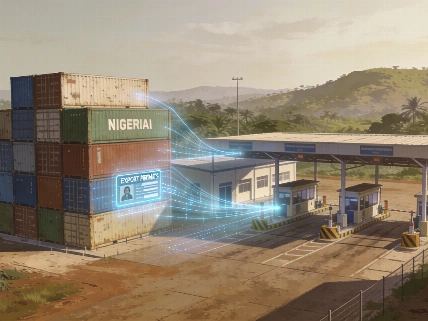
The delivery challenge is also visible in Nigeria, where the government is prioritising port upgrades beyond Lagos because more than 70 per cent of cargo destined for other regions passes through Lagos ports, according to Marine and Blue Economy Minister Adegboyega Oyetola, as covered in related port reporting.
Narayan linked the case for additional capacity to disruptions in West Asia. Restrictions on access to DP World’s Jebel Ali port in Dubai disrupted a logistics hub connecting Asia with the Middle East, Africa and Europe, with effects across the company’s network. He said businesses were having to maintain alternative suppliers and routes, increasing working-capital needs and operating costs. “Who do you think pays for all this disruption? You – as a consumer,” he said.
He also backed efforts to rebuild India’s domestic shipbuilding capabilities. DP World has signed a memorandum of understanding with Cochin Shipyard to support maritime development, although the company is not itself a shipbuilder; it has expertise in ship repair, dry docks and engineering, procurement and construction services.