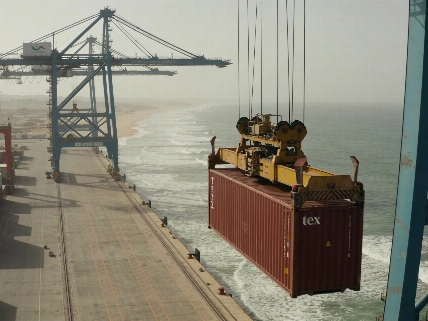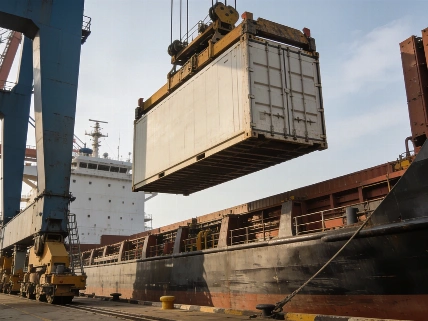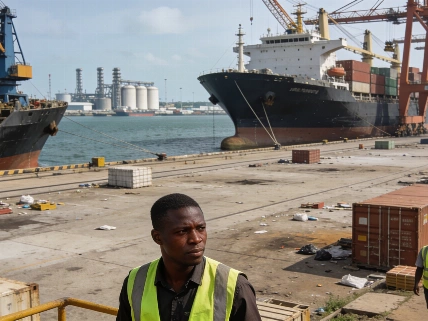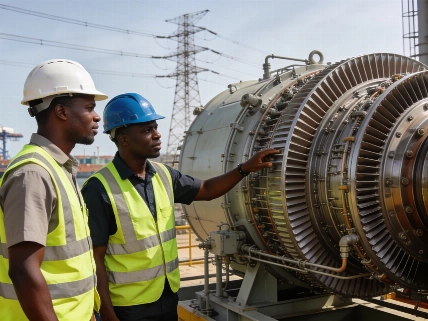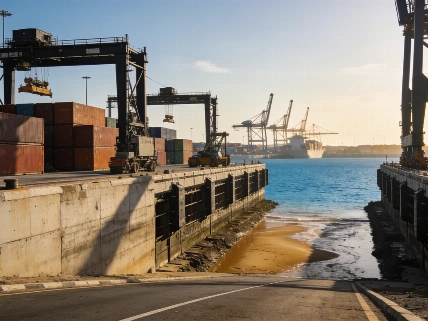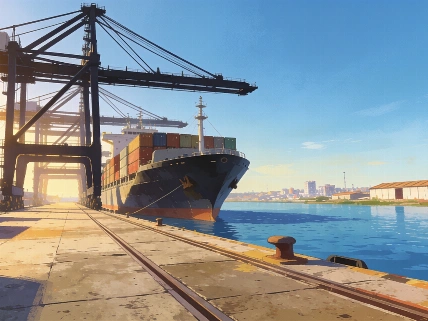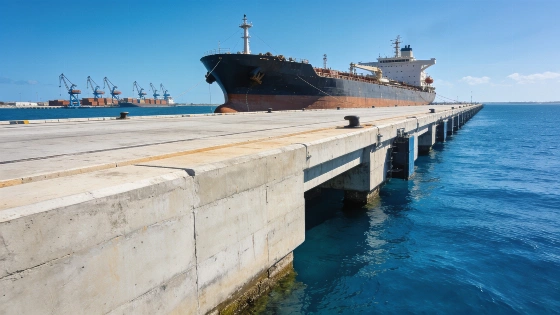
Cargo throughput rose from 9.6 million tonnes in 2024 to 14.7 million in 2025, putting pressure on Cotonou's capacity. The port has brought 454 metres of new quay into service, taking the completed total under its modernisation programme to 854 metres. Eiffage Génie Civil announced the handover on 17 November 2026, reporting that the new quays were already operational at the Autonomous Port of Cotonou.
The additions comprise a 154-metre southern quay with a water depth of 15 metres and a 300-metre northern quay with a depth of 16 metres, according to Eiffage Génie Civil. The 300-metre northern section is separate from the 400-metre northern section delivered in early 2026. Together with the new 154-metre southern quay, the completed phases bring cumulative quay length to 854 metres: 700 metres at 16 metres depth and 154 metres at 15 metres depth.
Deeper water and access to regional markets
The 16-metre depth allows Cotonou to receive vessels that previously could not berth there, including larger bulk carriers and container ships serving West African routes. That expands its ability to compete with Lomé and Tema for transit cargo bound for the Sahel.
Niger is Cotonou's principal transit market and relies on the port for most of its imports. Burkina Faso and Mali are also inland destinations named in the port's transit trade.
Road access remains part of the capacity equation. Truck queues at the port entrance have historically extended clearance times beyond berth availability. The programme includes a truck staging area in Zongo to address that landside bottleneck. The port's modernization objectives also include better traffic flow and service quality for operators.
Modernisation programme and throughput targets
The 12-project investment plan is valued at nearly CFAF 500 billion (US$838.2 million) and has been under way for more than five years. At Transport Logistique Cotonou 2026, Port Autonome de Cotonou Commercial Director Kevin Potier said more than CFAF 450 billion had been invested in port infrastructure expansion and modernisation since 2021. He cited an annual cargo-handling capacity target of 25 million tonnes. The programme includes Terminal 5 and a new bulk cargo terminal. It also covers expansion of the harbour basin to accommodate vessels with drafts greater than 15 metres, as well as a maritime business centre.
Terminal 5 is intended for bulk cargo, including agricultural exports and imported inputs such as fertiliser and grain. Eiffage reported that the basin-expansion and quay-renovation works involved dredging more than 1.5 million cubic metres of material and pouring 61,000 cubic metres of concrete. Crews also laid 24,000 square metres of paving and used 3,250 tonnes of reinforcing steel. Further northern-quay expansion phases were still under way in November 2026, with Eiffage working alongside port representatives and project engineer Tanger Med Engineering.
Cotonou aims to reach annual cargo throughput of 25 million tonnes and container traffic above 1 million TEUs. Throughput is projected to reach 16 million tonnes by the end of 2026. The capacity push comes alongside port expansion elsewhere on the continent, including the opening of Morocco's East Terminal. Potier also highlighted regional connectivity as a strategic issue for the port, alongside physical capacity, in remarks at the 2026 logistics conference.